Semantic Search and Chatbot
Semantic Search
Semantic search refers to the capability of the search system to understand the meaning behind words and retrieve results that are contextually relevant rather than just keyword-matching. This involves analyzing the intent and context of the user's query, considering synonyms and the relationships between different terms to provide more accurate and contextually appropriate search results. Semantic search aims to enhance the precision and relevance of search outcomes by understanding the semantics or meaning behind the user's input.
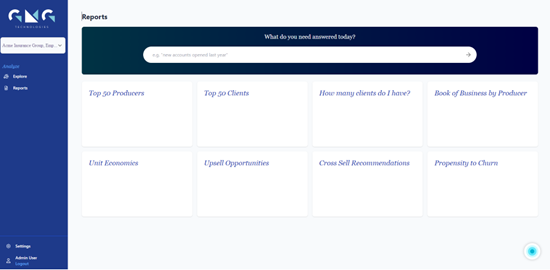
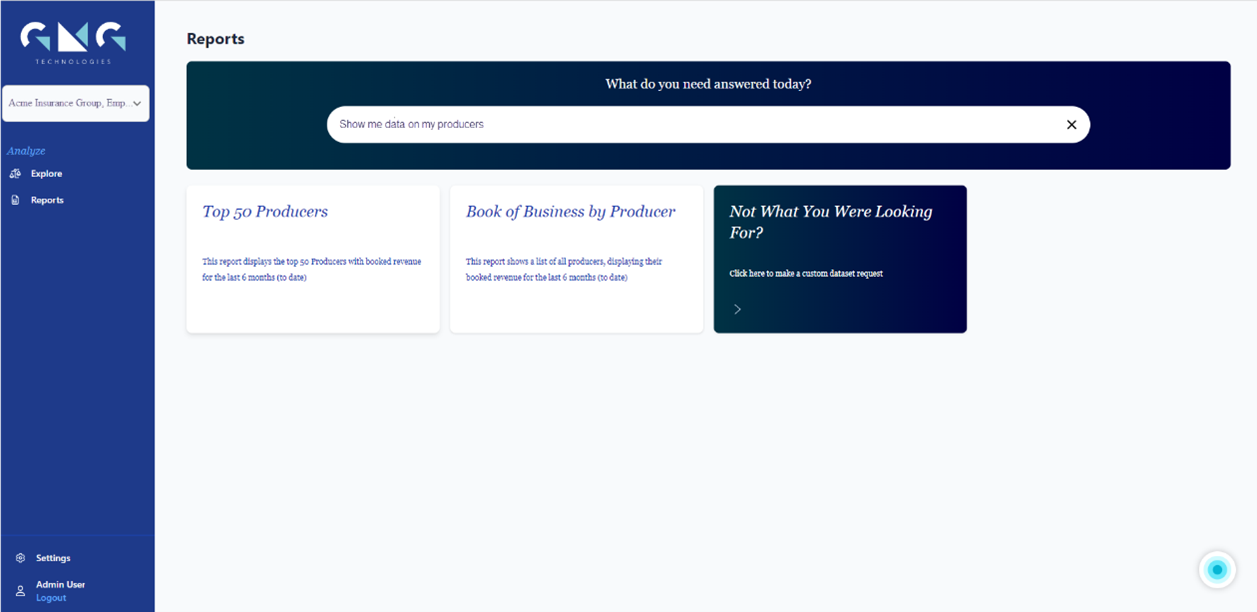
To leverage the semantic search function, users can simply type a question or request pertaining to their accessible resources into the designated search bar at the top of the window, “What do you need answered today.” Upon submitting a request, users will receive relevant reports tailored to their input. This ensures users obtain specific and pertinent information in response to their requests.
Semantic search leverages user inputs over time to intelligently learn and adapt to the types of requests and reports that a user commonly engages with. This adaptive functionality enhances the platform's responsiveness to individual user preferences and information needs. Optimizing semantic search learning is most effectively achieved by offering feedback through the available "Not what you were looking for" option in the search results. This feedback loop enhances the system's understanding of user preferences and improves future search outcomes accordingly. Additionally, feedback on unavailable data can be requested via the submit a “custom data request” for review and consideration.
Chatbot
The chatbot feature is designed to simulate conversation with human users over a messaging platform. It works by employing natural language processing (NLP) to understand and interpret user inputs, allowing it to generate contextually relevant responses.
Accessing the chatbot is convenient through a button located at the bottom right corner of every window within the platform. This strategic placement ensures easy and quick engagement with the chat functionality.
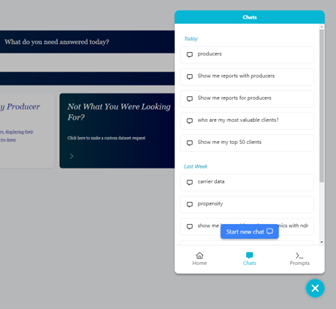
Upon opening the chat window, users will discover three distinct interaction methods with the chatbot: Home, Chat, and Prompts.
Home
Within the chatbot's “Home” area, users can get started by asking a question or conveniently view suggested prompts facilitating effortless retrieval of available reports. This streamlined process ensures effortless access to available reports and a user-friendly experience within the chatbot interface.
Chat
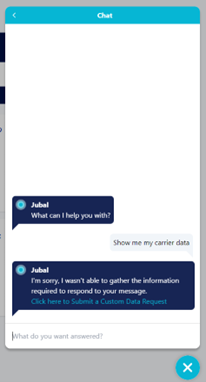
In the chatbot's "Chat" section, users can seamlessly review their recent conversations, up to the last 30 days, or initiate a new chat. The chatbot will return relevant reports based on the user’s request. The chatbot employs user inputs to improve its understanding over time. In instances where the chatbot cannot provide the expected results, it offers an option to enter a “custom data request.” Users are encouraged to make use of this feature, as it significantly contributes to refining the chatbot's performance according to specific user needs and preferences. This straightforward interface empowers users with the flexibility to manage existing interactions and effortlessly commence new conversations within the platform.
Prompts
To explore all available reports, users can navigate to the "Prompts" section of the chatbot. This dedicated space offers a comprehensive overview of prompts, enabling users to efficiently access a range of predefined reports within the platform.